

2en1 Students Halls / BFV Architectes
The project consists of two twin buildings characterized by their « recto-verso » design.
The project consists of two twin buildings characterized by their « recto-verso » design.
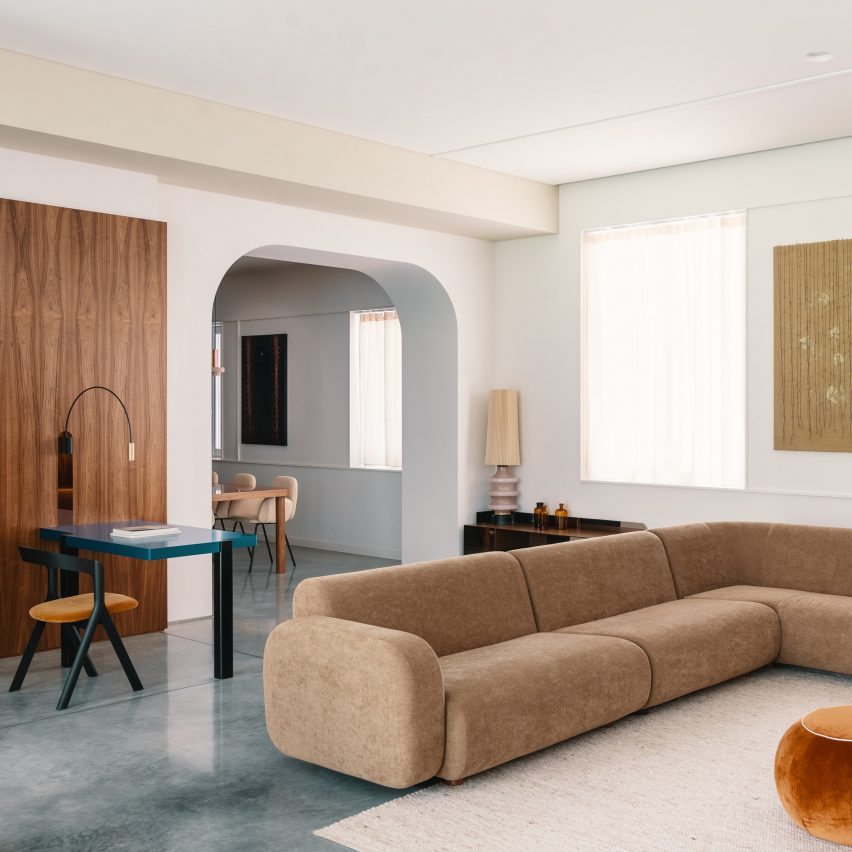
Italian architect Fabio Fantolino has created his own apartment inside a palatial 19th-century building in Turin, using pops of green and petrol-blue throughout its interior. The Casa Mille apartment lies behind the doors of a 19th-century palazzo that once belonged to an Italian nobleman called Count Callori. Its living spaces take over a ground-floor extension
The post Casa Mille in Turin is set within the former home of an Italian count appeared first on Dezeen.
The Klotski is a three-story, mixed-use infill building situated in the Ballard neighborhood of Seattle. Close to downtown, the area is noted for its dynamic mix of commercial, manufacturing, and residential uses. Reflecting the eclectic vibrancy and gritty nature of the neighborhood, the 10,041-square-foot CMU and steel-framed building houses a beer hall, an office, a maker space, a studio, and a small caretaker’s apartment. Riffing on the idea of shifting uses and planes, the design takes its visual cue from a sliding tile puzzle, also known as a klotski, where the object is to rearrange tiles to solve the puzzle. The puzzle is expressed on the south-facing exterior of the building through the use of 7’x10’ perforated metal screens. The screens slide up and down, enabling users to change the screens position for sun shading and privacy, and in response to seasonal variations in daylight.
Urban transition and new orientations. The project adds two floors on an existing volume and reorganize entirely the plan with a creation of a patio, transforming an urban house into a two apartment construction, a duplex on the two first floors and a triplex above it.
Tlacotalpan 89 arises from the merging of two properties of approximately 475m2, in the Roma Sur neighbourhood. Its location is essential both regarding mobility and in its architectural analysis, due to the real estate growth in the region, and the demand surrounding the design proposal. On the other hand, when two properties merged, the project generated the facility to carry out different configurations for the apartments, outdoor spaces, parking lots and public areas.
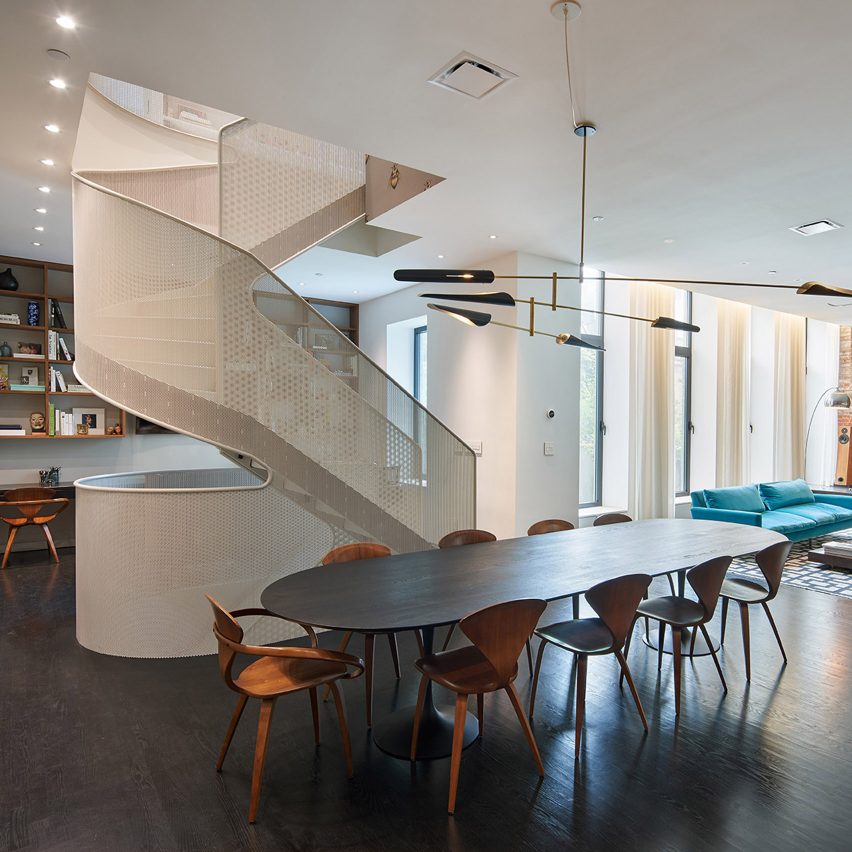
New York studio WORKac has inserted a white perforated steel staircase into this three-storey Brooklyn apartment as part of a renovation designed to brighten its dark interiors. Wyckoff Street Residence was designed for a family looking to bring more natural light into the upper levels of its home. The 2,550-square-foot (236-square-metre) space comprises three levels,
The post WORKac adds curving perforated steel staircase to Brooklyn apartment appeared first on Dezeen.
The project responds to the challenge of combining three different programs into one composite building that stretches along Rue Stendhal in the North-East part of Paris. The building stands in dialogue with a large patch of grass covering two water tanks. To orient the courtyard, balconies, and dwelling spaces relative to the sun; the project opens fully to the inside of the green space nearby.
The first Phase of project Lorentz at the station square in Leiden is completed and the new residents started moving in: an important step in the renewal of the Leiden station area. Lorentz Leiden consists of a composition of three light-colored towers of different heights on top of a plinth building. In Phase 1, the first two towers and plinth have now been realized. The towers have a slightly sparkling aluminium façade cladding; the highest tower in champagne color and the lower one in bronze. Both towers are crowned with two storey-high maisonettes that offer a splendid view on the city and far beyond.
Gentrification is cruel to the historical centres of cities. Living in a walkable, diverse and well-equipped neighbourhood is becoming a highly coveted luxury. It’s necessary to regulate the real estate market and mass tourism, to democratize access to housing in densely populated areas, in addition to multiplying its share of affordable housing, either public or cooperative. But, how to build housing in the developed centre if it is the place where the available space is more expensive and scarce? In a kind of urban dentistry, with what we call Tactical Housing, such as the APROP and ATRI strategies, cities are proposed to fill in the cavities of their built-up teeth. It understands vacant lots, properties that have not exhausted their buildability and even excessively large public spaces as places of opportunity to house residential units that, using modular prefabrication with criteria of urban, ecological and social sustainability, achieve faster execution that is more economic, fair and sustainable than conventional public housing.
The building is located on a quiet street in the neighborhood of Villa Urquiza, limited by edges that generate two rail lines with a focus on Coghlan and Drago stations.
Copyright © 2026 | WordPress Theme by MH Themes