
‘Abstract Landscape’ Shapes Daixi Cultural Sports Complex
Located in Daixi Town, Wuxing District, Huzhou, China, the Daixi Culture, Sports and Commercial Complex by Minax Architects addresses the loss of local identity caused by rapid urban modernization. Positioned between the Tianmu Mountains and Taihu Lake, the town historically embodied the spatial qualities of both mountainous and waterside landscapes. However, recent urban upgrades lacked distinctive cultural references and adequate public facilities. In 2020, a centrally located plot, bordered by two schools and divided by a north-south river featuring a preserved Qing Dynasty stone bridge, was designated for a comprehensive public building. The site includes a rectangular eastern section and a more irregular western riverfront extension. The new complex was conceived to provide cultural, sports, and commercial amenities while reinforcing local identity through a publicly accessible architectural intervention.
The project is structured around the concept of ‘Abstract Landscape,’ drawing from principles in Chinese landscape painting that prioritize spiritual interpretation over literal representation. Rather than replicating historical forms, the design translates landscape qualities into geometric compositions and spatial sequences. Abstract volumes reference the condition of distant mountains and nearby waters, while controlled color contrasts establish a clear visual framework. The sports complex unfolds along both sides of the river. The commercial center occupies the west bank, while the culture and sports center is located on the east bank. These two components are connected by the Qushui Pedestrian Corridor, a curved circulation element that functions as both infrastructural link and spatial installation. The corridor establishes continuity across the river while organizing views and pedestrian movement.
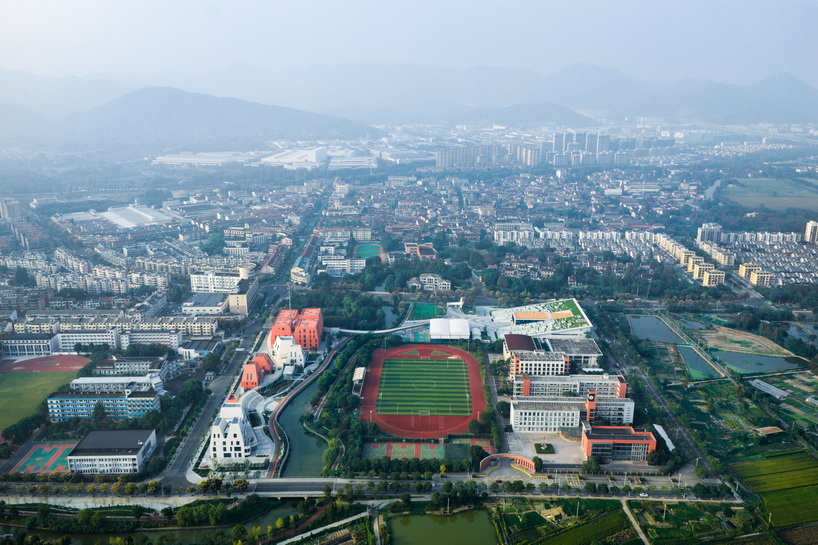
overall bird’s-eye view | all images by Shan-Jian images
Sloping Roofs and Color Contrast define Minax’s design
The two building groups are composed of distinct geometric volumes with sloping roofs and simplified facades. The massing strategy creates a sculptural relationship with the terrain, reinforcing the dialogue between built form and landscape. Color plays a central role in the architectural language. White references the traditional whitewashed walls of Jiangnan architecture, while orange-red volumes introduce contrast inspired by seasonal tones in the surrounding mountain forests. Through this combination, the design team at Minax Architects produces a defined yet cohesive visual identity. The Qushui Pedestrian Corridor follows a curved trajectory that echoes the river’s flow. Its geometry balances linear precision with spatial variation, framing views toward the opposite bank, the water below, and the distant skyline. The sequence of movement recalls the unfolding perspective of a landscape scroll, translating pictorial composition into built form. The facades are conceived as durable, weather-appropriate surfaces suited to a public complex in a Jiangnan climate.
The commercial center is designed with flexible interior layouts to accommodate varied retail and service functions. Sloped roof profiles contribute to layered interior volumes while reinforcing the external silhouette. The culture and sports center includes a swimming pool, gymnasium, and basketball court, providing facilities for community use. Outdoor spaces extend the program into the landscape, incorporating riverbank paths and rest platforms that encourage public interaction. The pedestrian corridor functions not only as circulation but also as a vantage point and gathering space, integrating architecture with everyday activity.
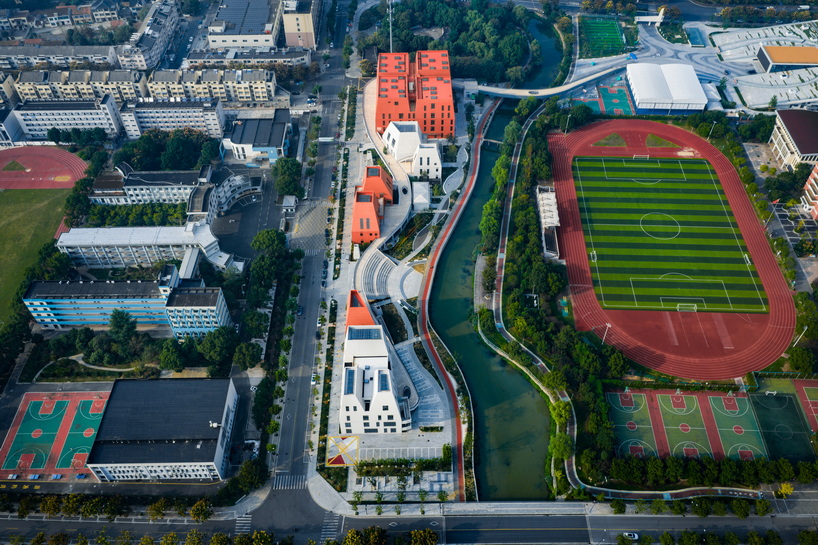
aerial view of Area A-01
Huzhou Daixi Culture, Sports and Commercial Complex operates as both infrastructure and landmark within Daixi Town. By interpreting traditional landscape principles through contemporary architectural language, the project avoids direct historical imitation while resisting standardized modern development. Through its spatial organization, formal abstraction, and integration of public amenities, the complex repositions cultural references within an urban framework. The result is a built environment that combines functional programming with a reinterpretation of regional landscape identity.
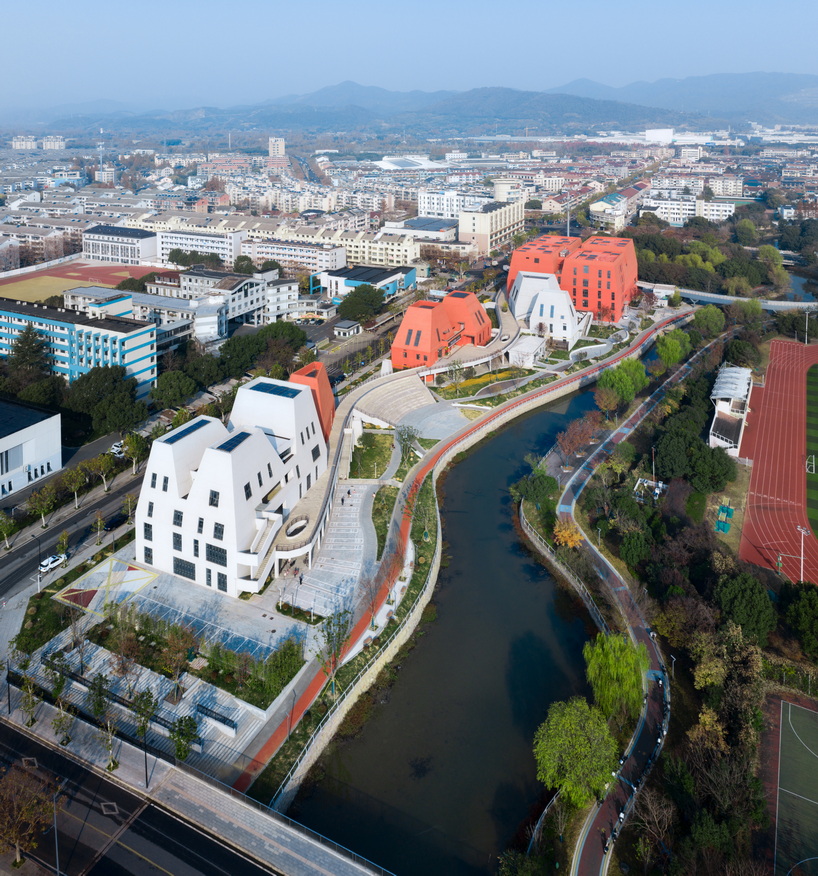
aerial view of Area A-02
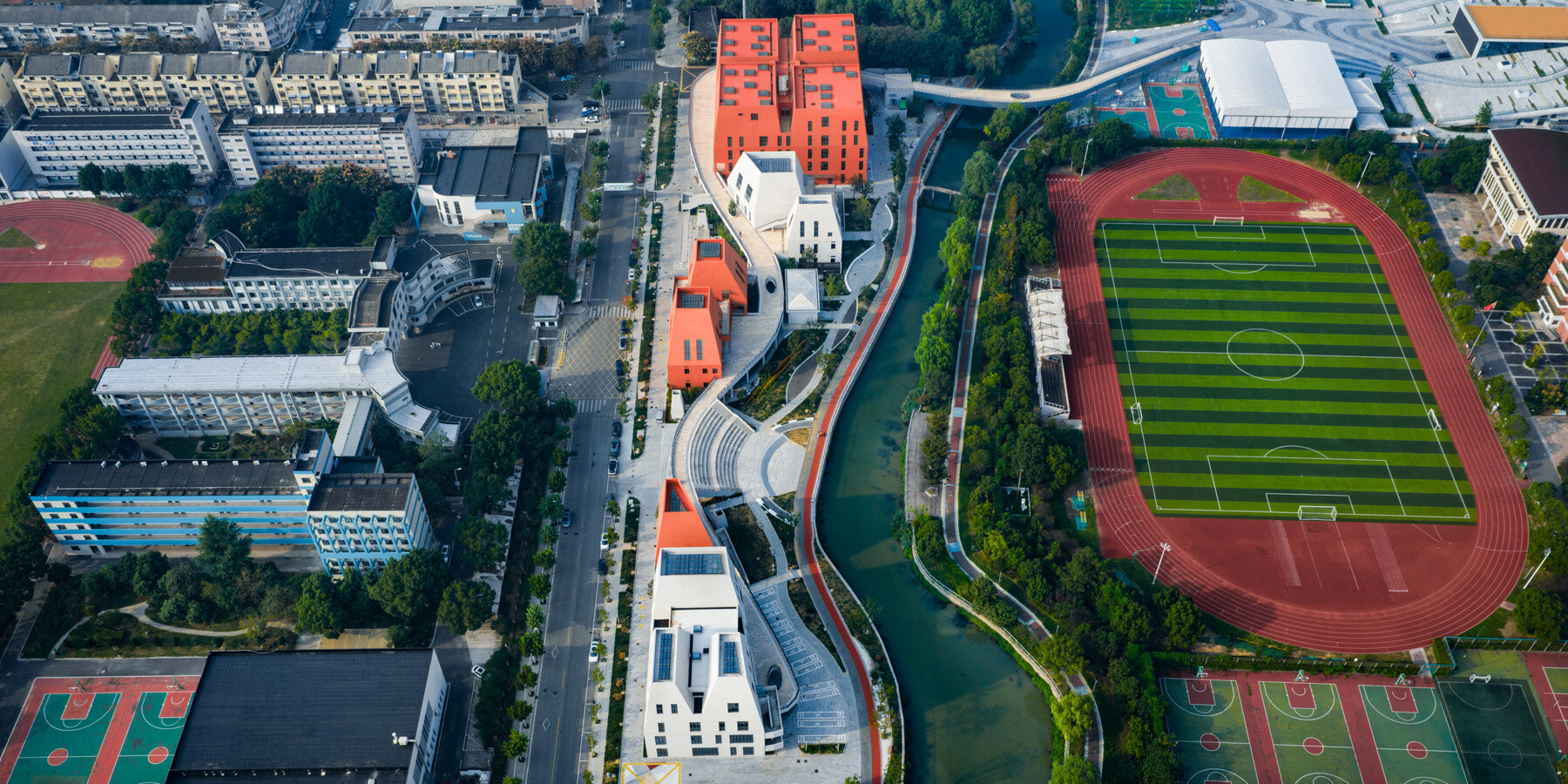
aerial view of Area A-01
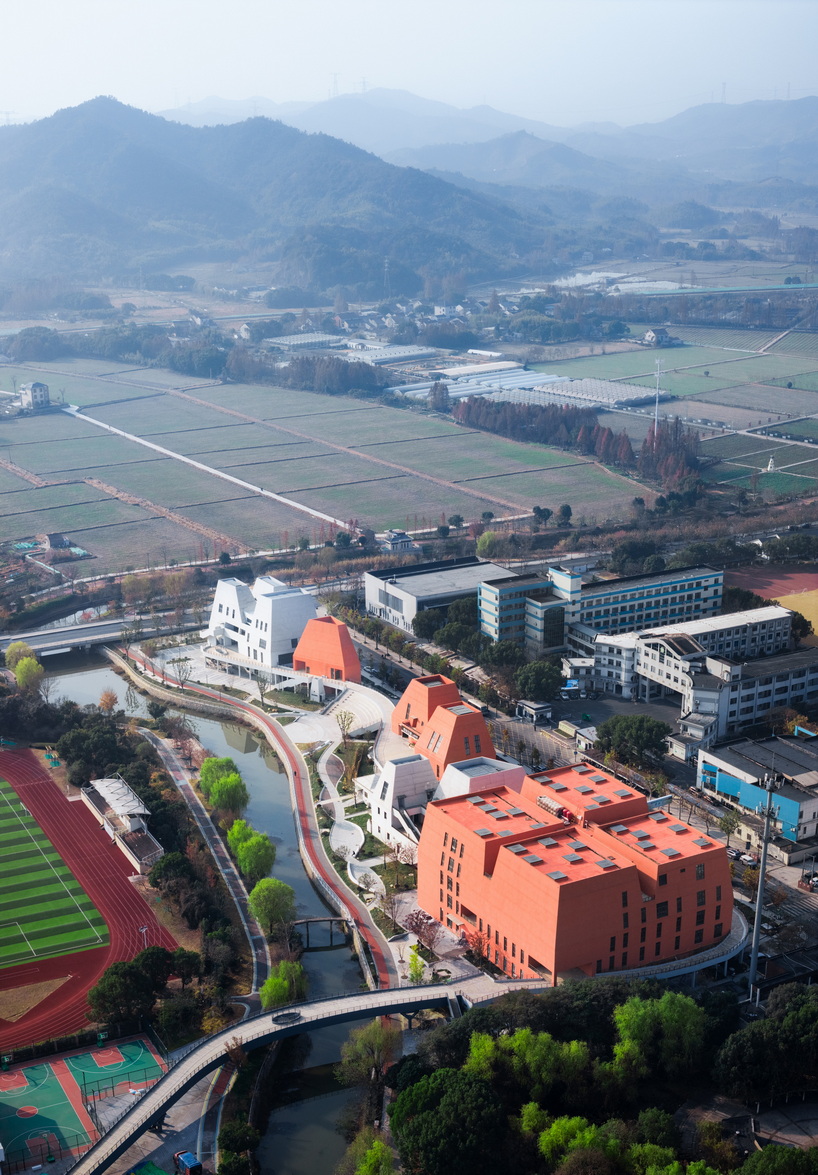
aerial view of Area A-03
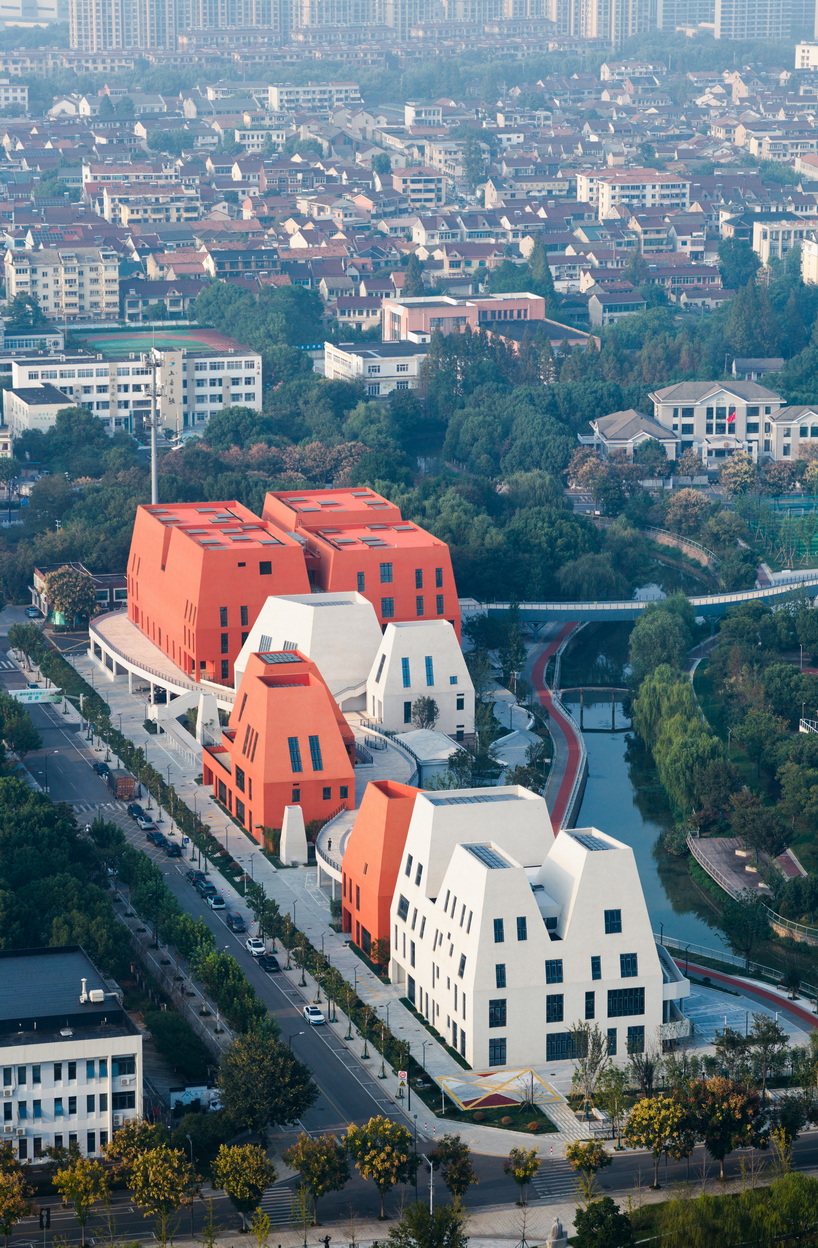
aerial view of Area A-04
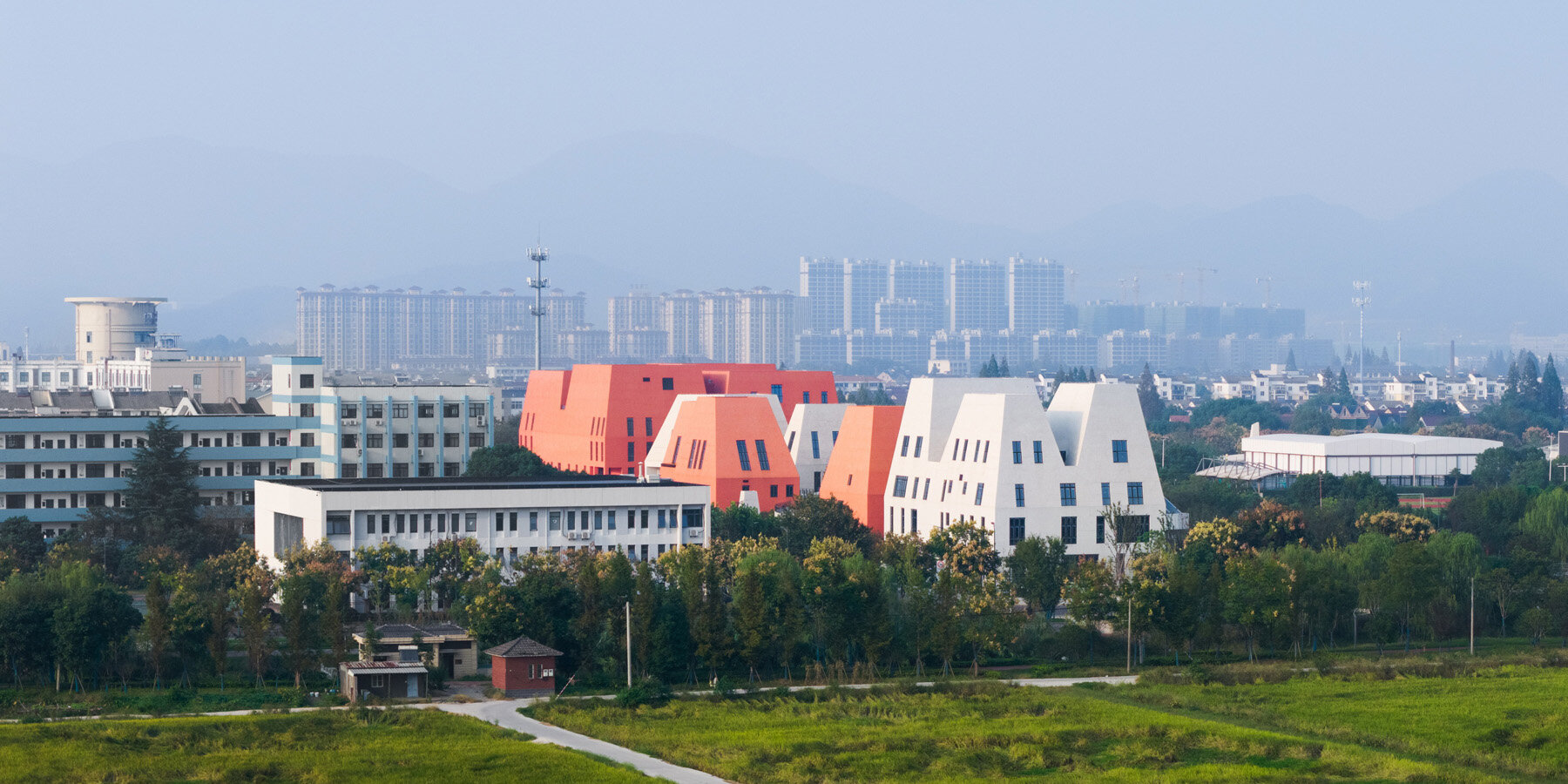
a group of buildings hidden in the urban scenery
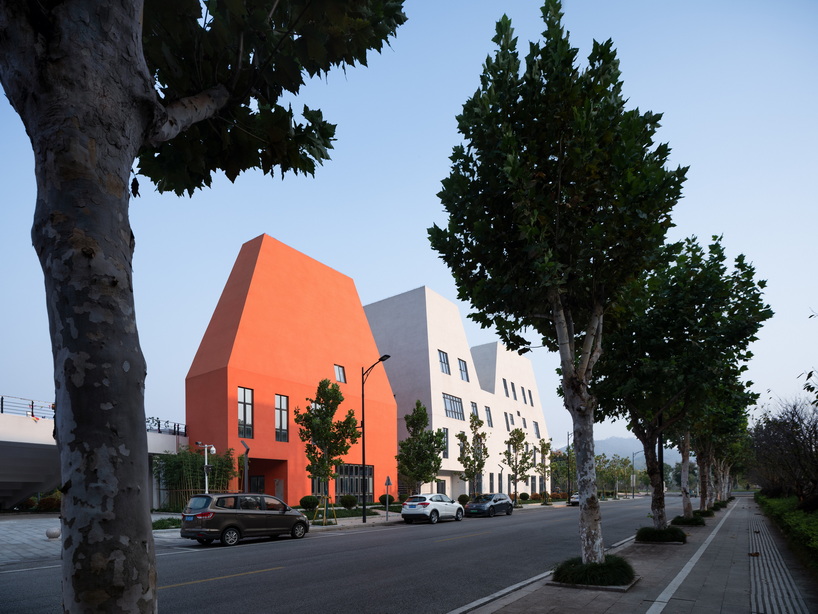
the concise sculptural volume creates a brand new street scene
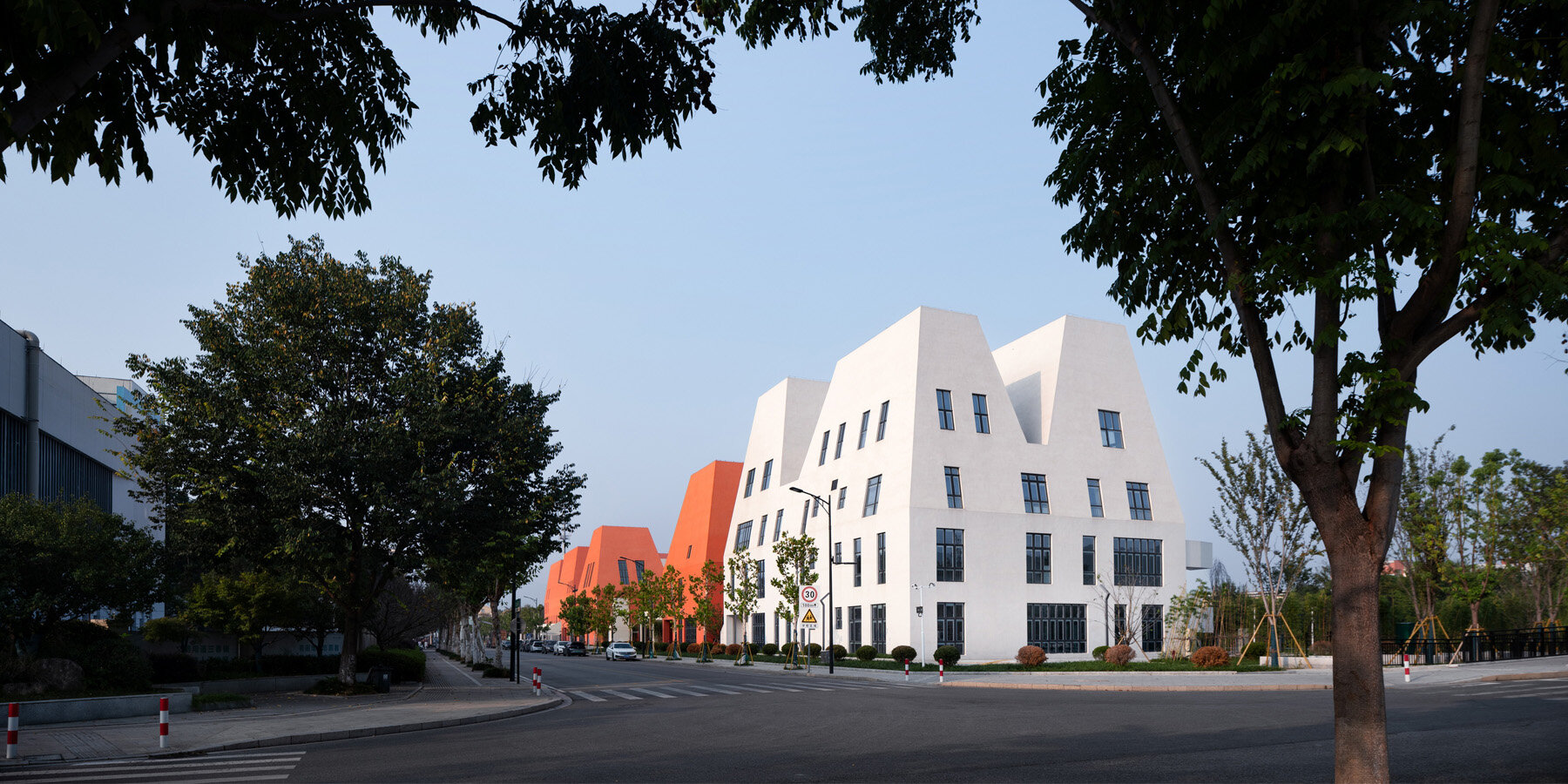
buildings standing beside the street
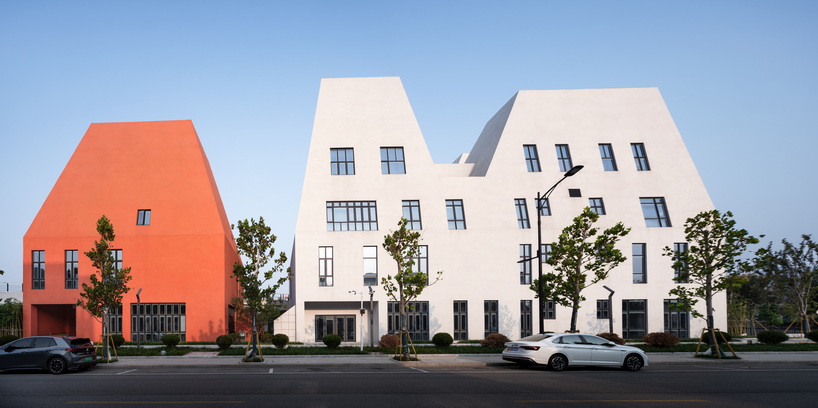
abstract form reproduces regional scenery
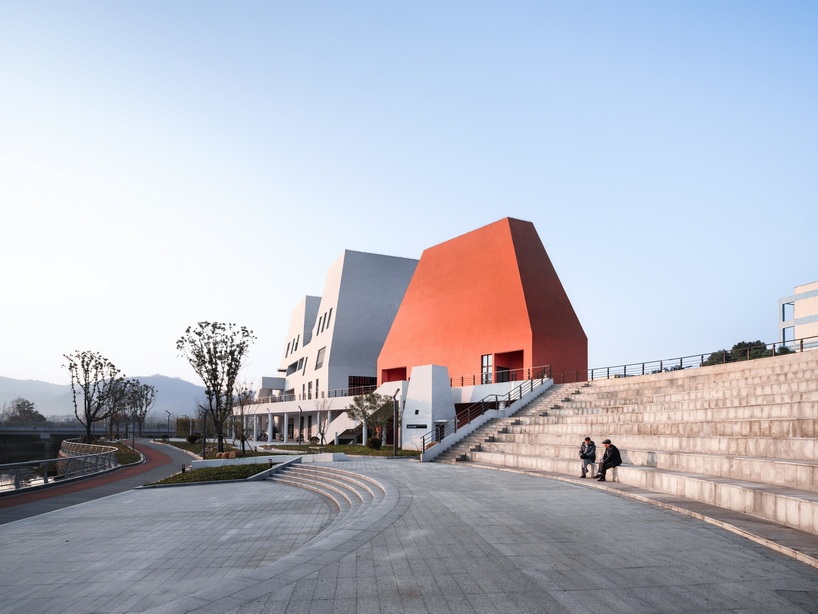
the curved corridor passes through the building complex and becomes an outdoor public activity area
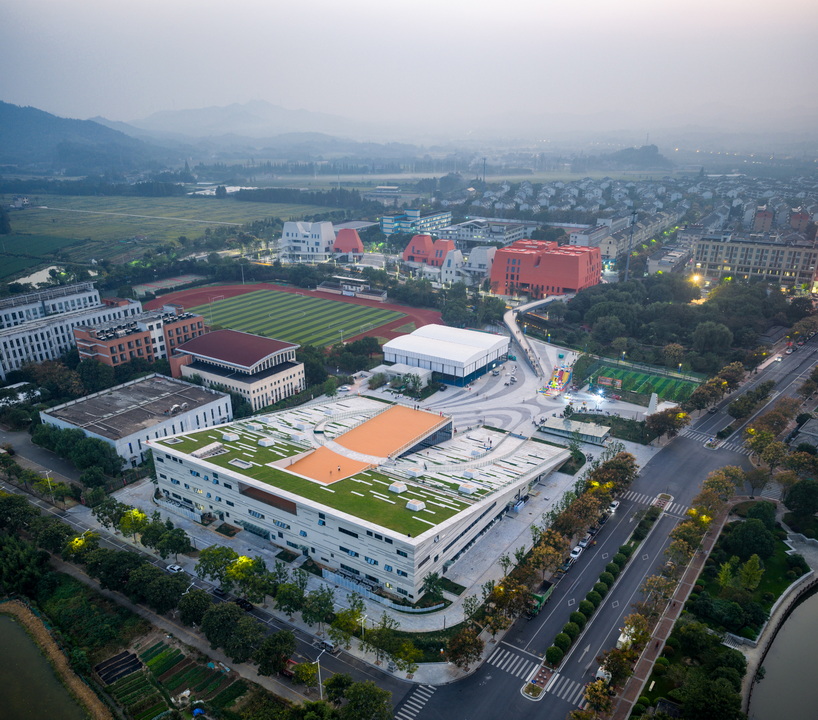
aerial view of Area B
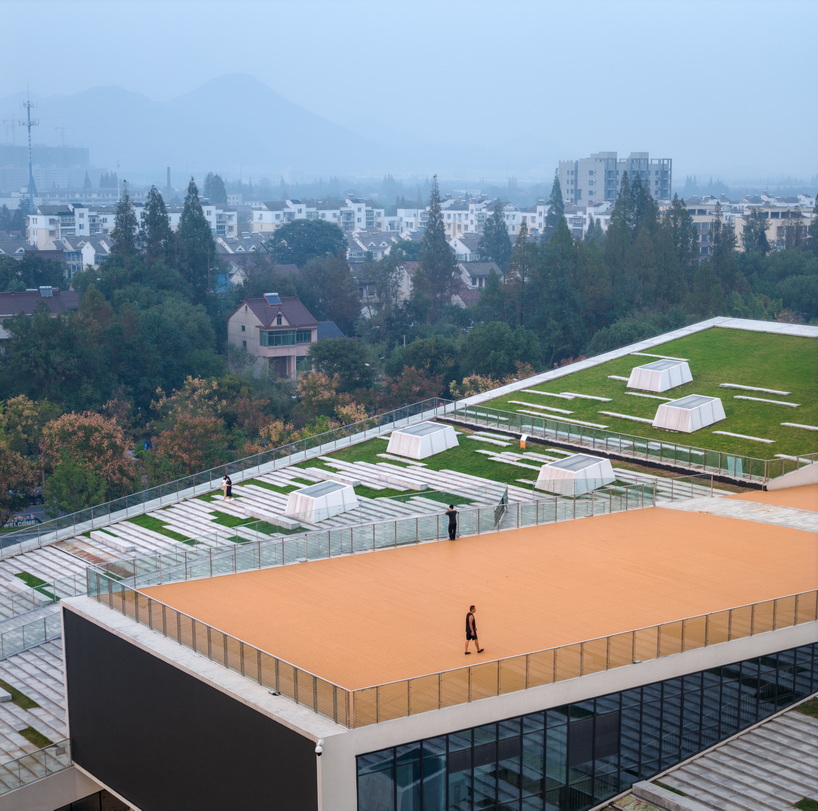
sloping Roofs in the Context of Ordinary Urban Landscapes
project info:
name: Huzhou Daixi Culture, Sports and Commercial Complex
architects: Minax Architects | @minax_architects
chief architect: Lu Zhigang
design team: Huang Congyi, Xu Zhanhang, Liang Dingpeng, Liu Chang, Chen Ziwei, Xie Guozhong, Zhang Benben, Zhou Junchi, Yang Yuhan, Zhao Xue, Li Yiwei
location: Daixi Town, Wuxing District, Huzhou, China
photographer: Shan-Jian images
designboom has received this project from our DIY submissions feature, where we welcome our readers to submit their own work for publication. see more project submissions from our readers here.
edited by: christina vergopoulou | designboom
The post red and white geometric sports complex emerges along daixi’s riverfront appeared first on designboom | architecture & design magazine.