
naf architect & design opens wall ajar house to greenery in japan
In a dense residential pocket of Tokyo’s Setagaya ward, naf architect & design completes Wall Ajar House, a two-story wooden dwelling defined by a carefully cut perimeter wall and a horseshoe-shaped courtyard. Designed by Akio Nakasa and Takumi Hara, the 108-square-meter residence occupies its 115-square-meter site almost entirely at ground level, securing a 17-meter uninterrupted visual axis from garage to washroom while filtering light through calibrated openings.
On first visiting the site, Akio Nakasa was struck by the greenery to the left and rear, visible from the street instead of the typical boundary walls. The architects wrap the plot in a continuous wall that is slightly opened on one side, as if peeling back packaging. That small incision becomes the facade and the primary gesture of connection.
Inside the perimeter, a courtyard is carved out. The roof that shades it is cut into a horseshoe form to frame the sky and adjacent trees; the courtyard floor mirrors the same geometry. This opening directs views upward and sideways, allowing light to enter at shifting angles throughout the day while maintaining enclosure from the surrounding density.
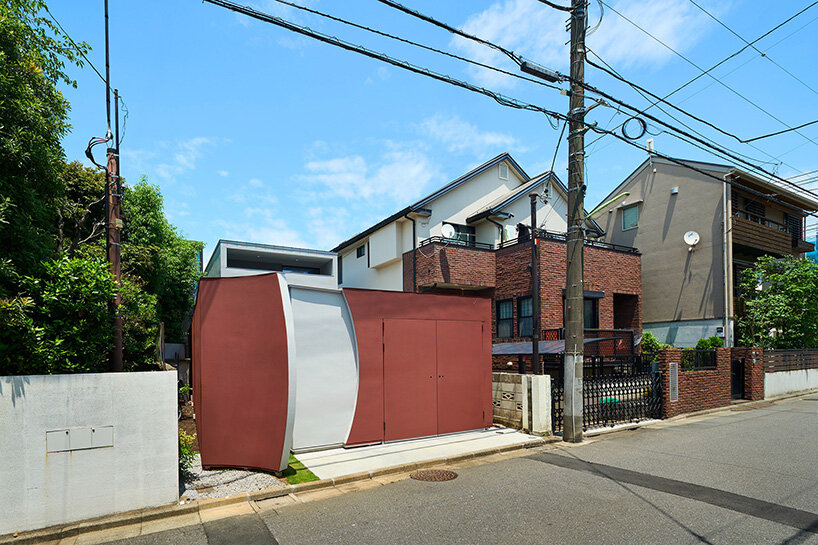
all images by Toshiyuki Yano
a 17-meter interior horizon
The site stretches 19 meters deep. On the first floor, the team at naf architect & design establish a 17-meter-long unobstructed sightline running from the garage at the street edge to the washroom at the back of the living, dining, and kitchen area. The garage, courtyard, and LDK (living-dining-kitchen) read as one space.
Walls on this level are painted a pale gray. Above, the second floor, roughly half the footprint, extends as another continuous zone from stairwell to bedroom, finished in a slightly darker gray. Inserted within these larger volumes are more private rooms with rounded corners and deeper gray tones, subtly distinguishing degrees of intimacy without fragmenting the plan. Sunlight enters through the slightly opened exterior wall and the horseshoe roof cut, producing gradients of brightness that interact with the layered gray surfaces. Rather than relying on partitions, depth is registered through tonal shifts and shadow.
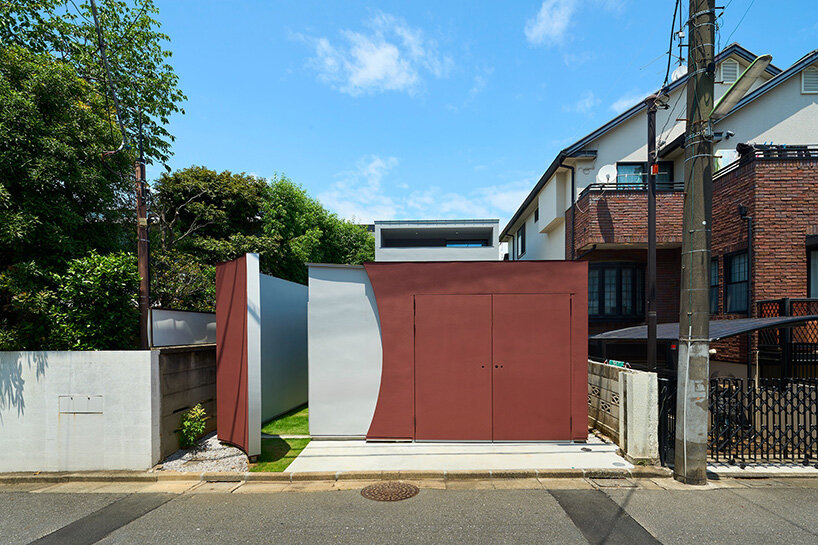
the street-facing perimeter wall peels back at one edge
the garage as tool chamber
The garage operates ambiguously, externally from the perspective of the LDK, yet spatially continuously in daily use. Floor levels are aligned closely, and full-height glazing separates the two, allowing the garage to function as an extension of the interior.
The client, who works in automotive design, collaborated closely with the architects on color, material, and pattern decisions, including the selection of a slightly reddish-brown exterior finish. The garage houses cars, motorcycles, bicycles, and even a large mirror, described as ‘tools’ that connect the family outward. A booth-like study is also positioned within the garage, conceived as another tool, enabling remote work without transmitting domestic noise or movement on screen. When the large double doors are opened, the connection to the street intensifies. The house can remain guarded, slightly ajar, or fully open, offering adjustable thresholds between domestic life and neighborhood presence.
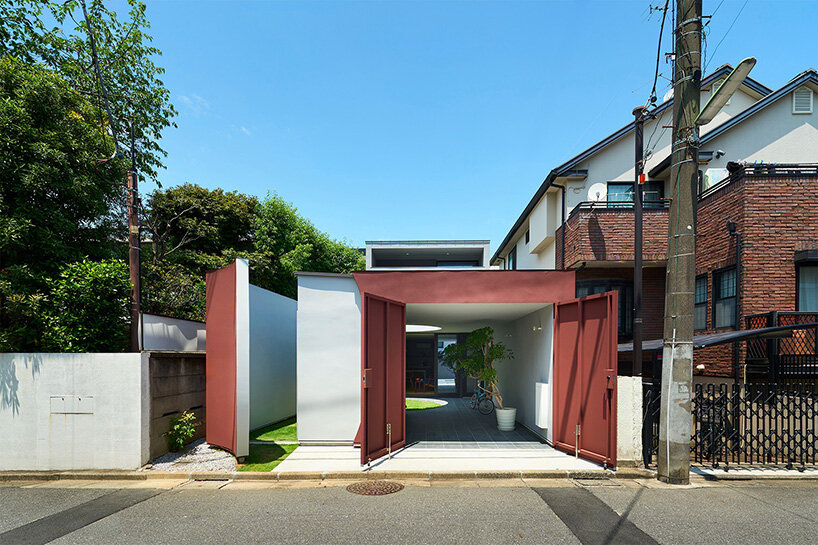
revealing a curved white inner surface and a glimpse of greenery beyond
calibrated privacy in a dense context
The family previously lived nearby in a skip-floor house composed as a one-room-like interior with multiple level changes. While spatially autonomous, it proved less suitable for raising an infant. In this new dwelling, floor levels and steps are minimized to bring daily life closer to the ground and to ease movement.
From the small opening in the perimeter wall, through the garage and courtyard, and into private rooms, each layer can be modulated. Lighting traces the courtyard and garage walls, anticipating future displays of art. The architects imagine the space evolving into a small gallery for gatherings with friends. Shortly before completion, the family announced they were expecting another child. The courtyard now anticipates use as a safe play area, for sunbathing, small pools, reading, or outdoor dining.
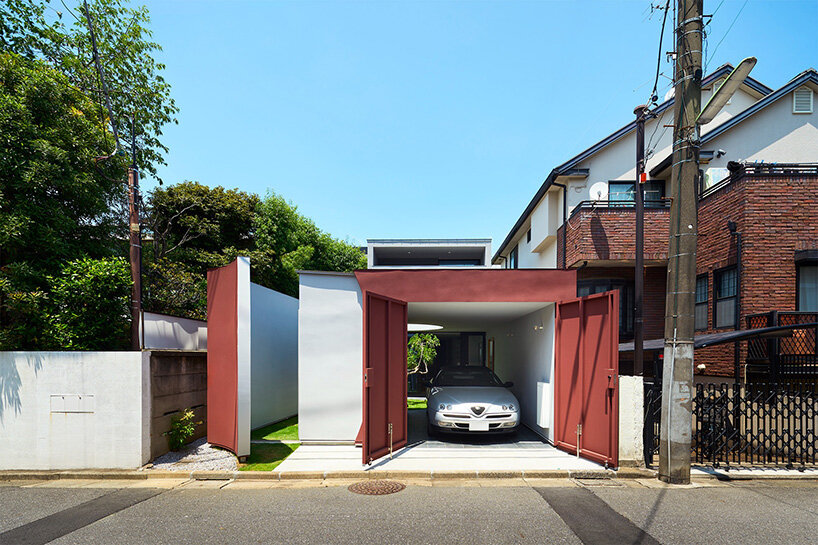
set within a dense Tokyo neighborhood
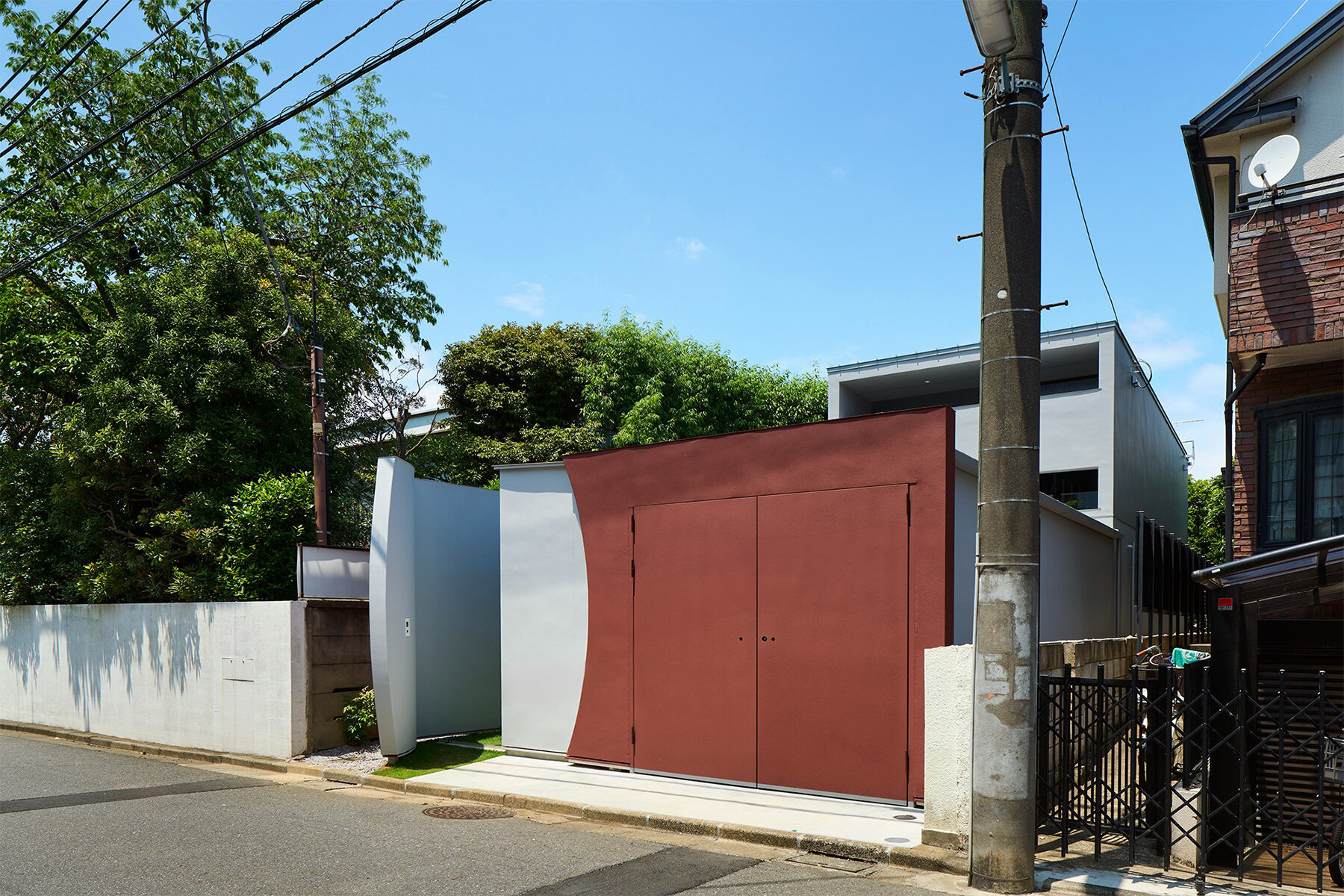
the compact volume asserts itself through a reddish-brown facade
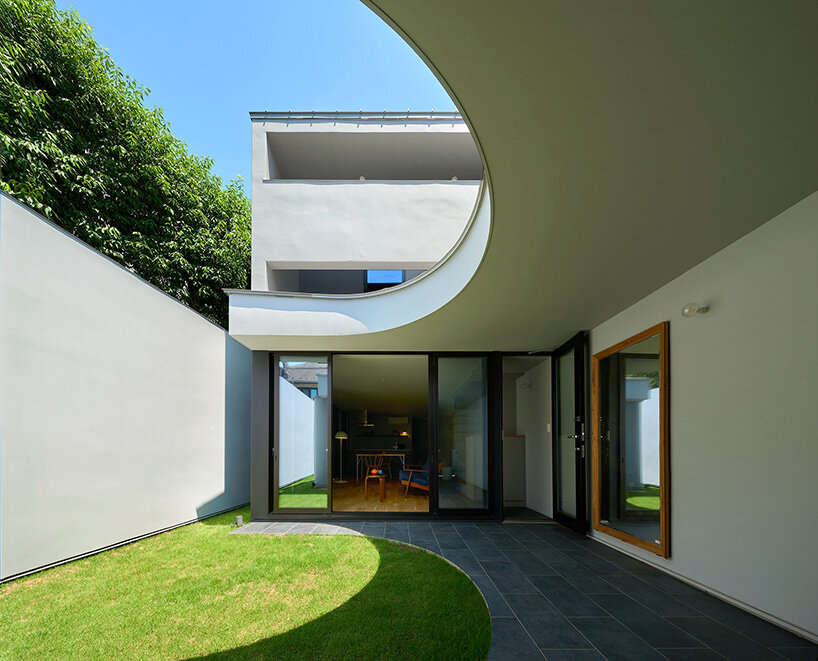
the courtyard’s curved ceiling edge directs views upward
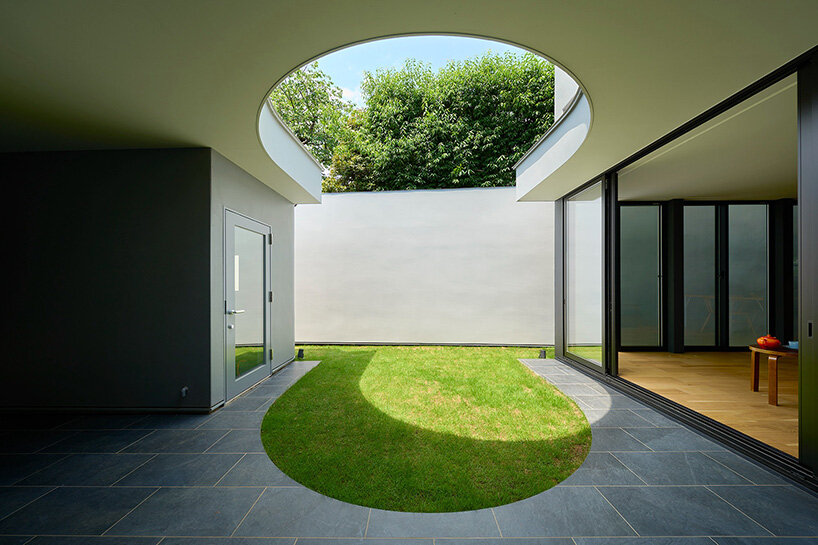
casting a soft arc of light onto the grass below
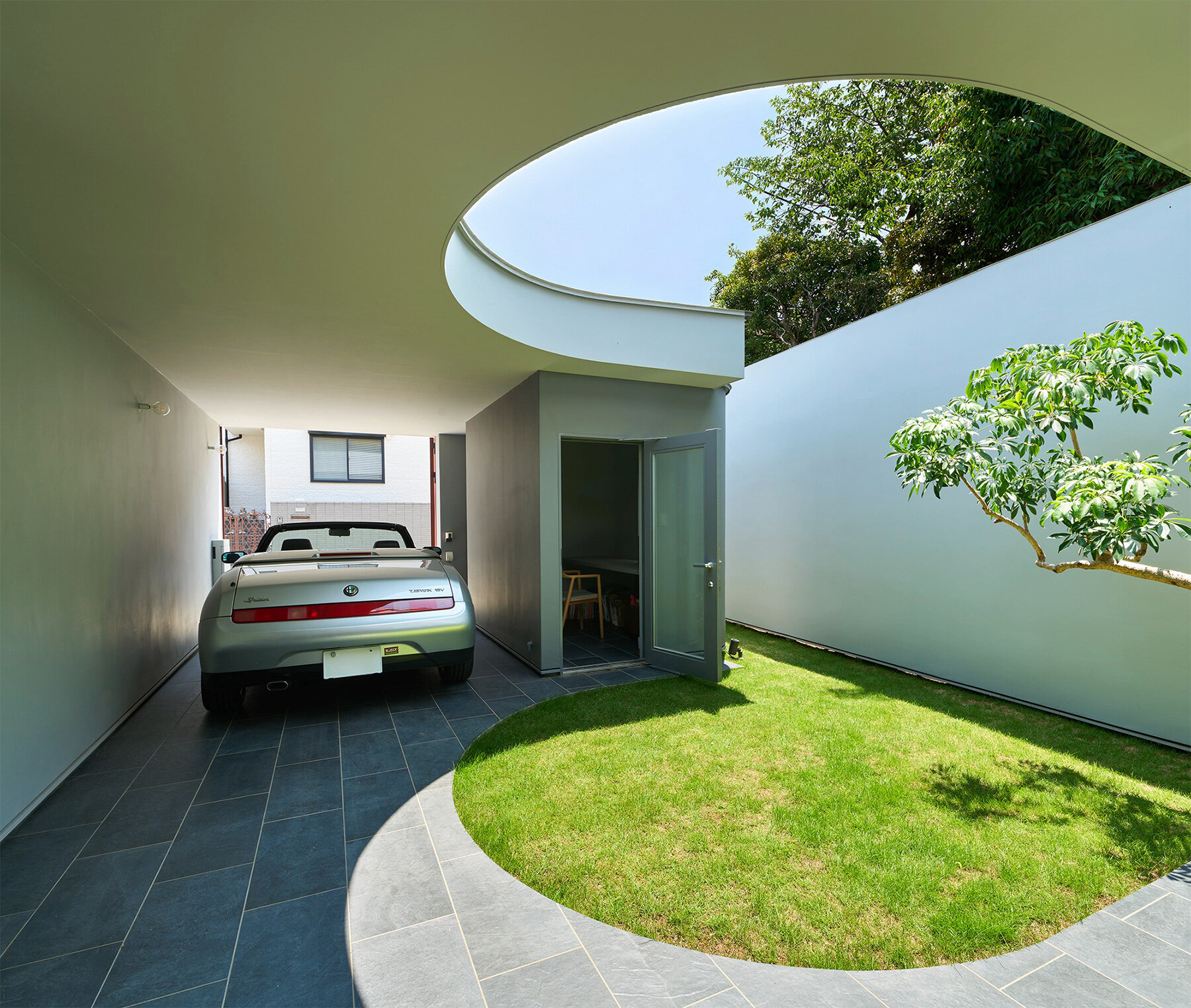
the reddish-brown facade folds back along the boundary
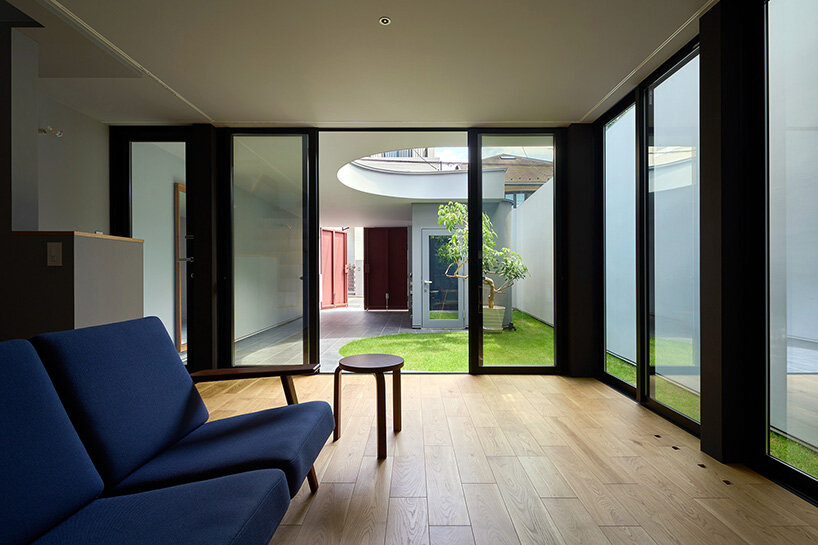
full-height glazing connects the living space to the courtyard
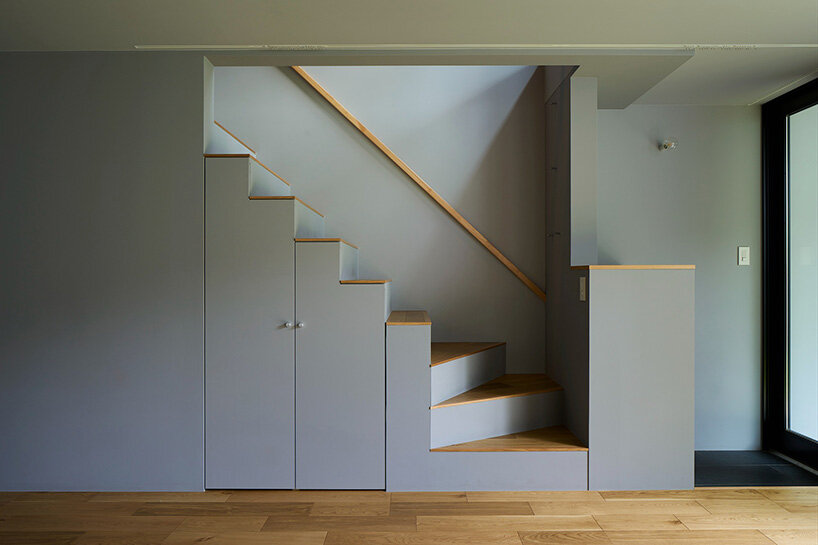
minimized level changes and built-in storage integrate the staircase into the open-plan living area
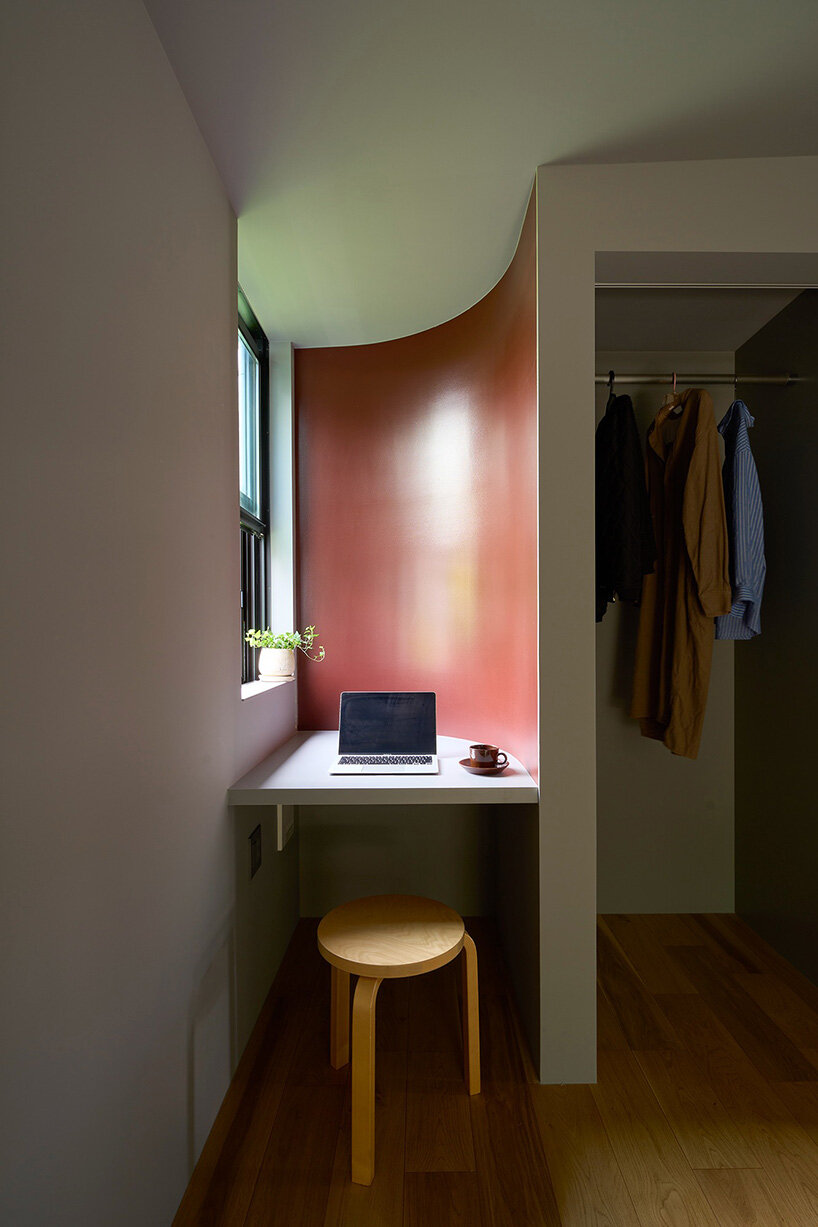
a compact study niche curves gently overhead
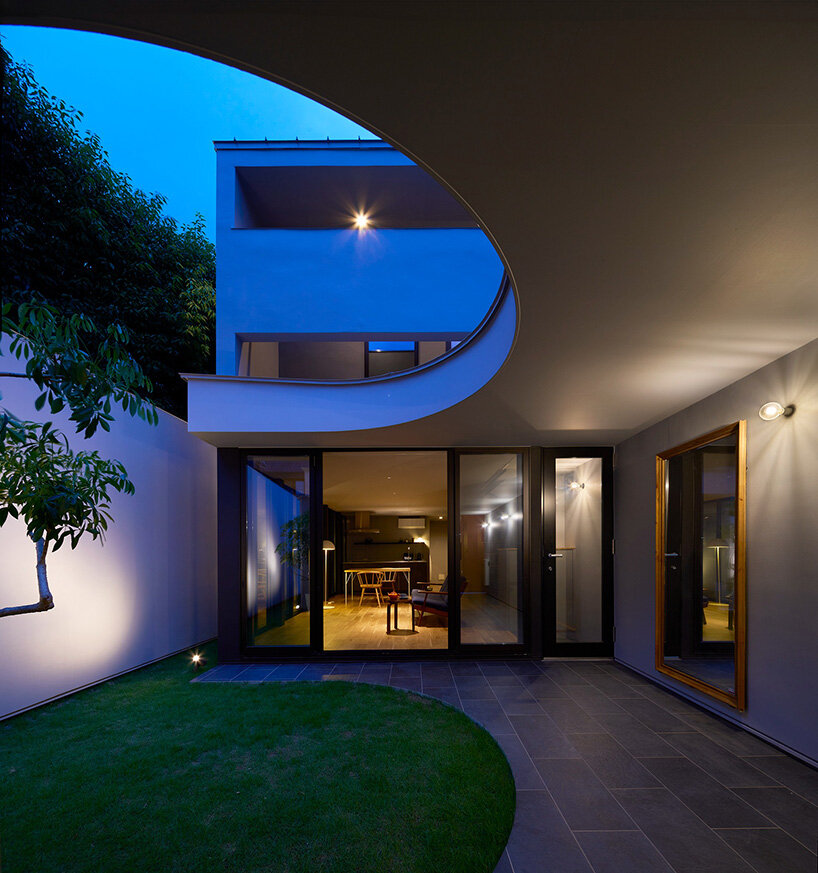
at dusk, concealed lighting traces the courtyard walls and curved soffit
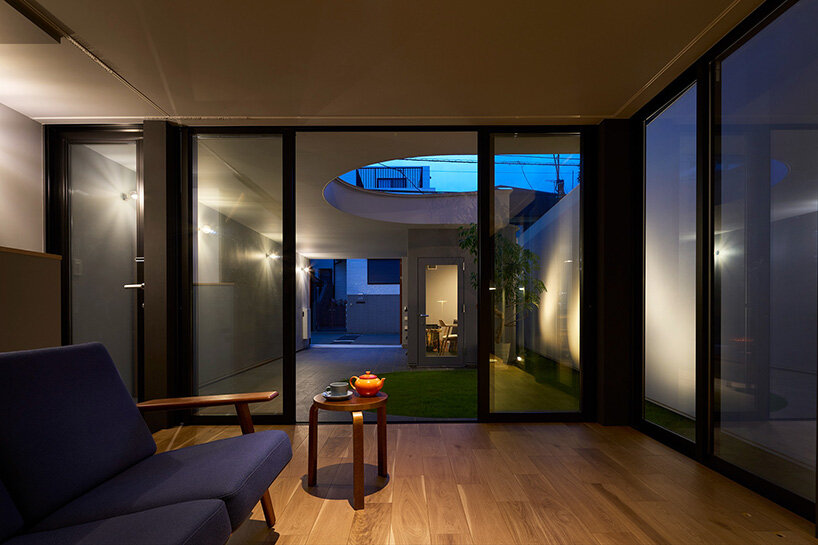
maintaining the 17-meter visual axis toward the street at dusk
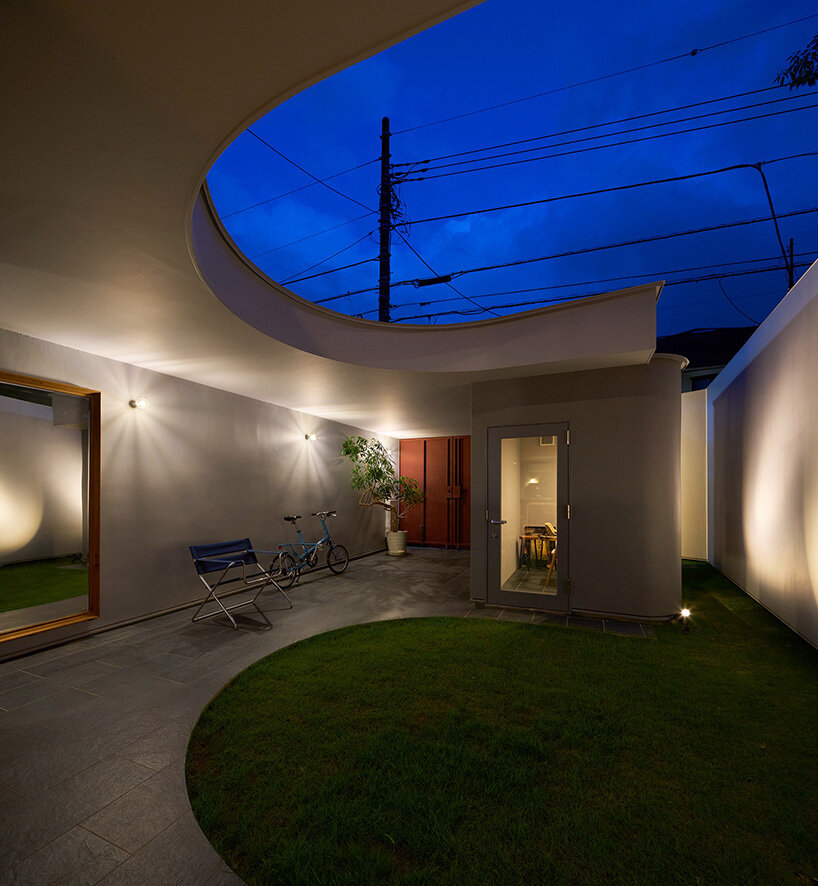
the curved roof cut reveals a deep blue evening sky
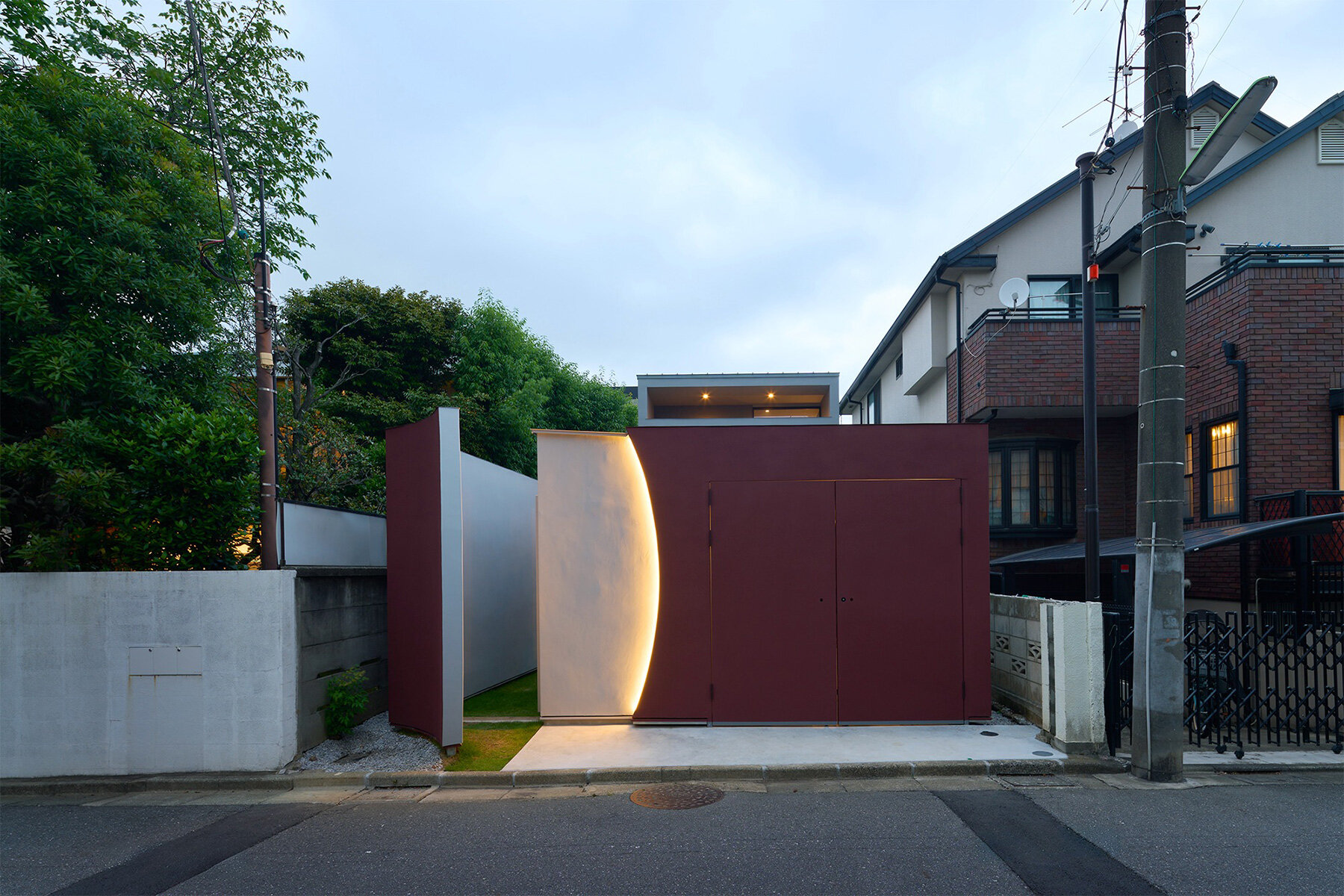
a concealed light line traces the curved inner wall
project info:
name: Wall Ajar House
architect: naf architect & design Inc. | @akionakasa_naf_architect_tokyo
location: Setagaya Ward, Tokyo, Japan
lead architects: Akio Nakasa, Takumi Hara
maximum height: 5.734 m
maximum eave height: 5.217 m
site area: 115.050 square meters
building area: 67.330 square meters
total floor area: 108.090 square meters
structural engineer: Yosuke Misaki / EQSD
contractor: J Homes
photographer: Toshiyuki Yano
The post naf architect & design peels back the perimeter of tokyo house to reveal curved inner facade appeared first on designboom | architecture & design magazine.