No Image

Psychology of Scale: People, Buildings and Cities

November 25, 2020 Christele Harrouk 0

In the introduction of Cities for People, Jan Gehl stated clearly that most cities have neglected the human aspect when planning the built space. While technologies have allowed us to build large, our focus shifted from creating architecture for humans to erecting structures that look like they are meant for a different kind of species. Top-down urban planning decisions have ignored scales adapted to the senses and organic growth, and new ideologies prioritized speed, functionality, and profitability.

No Image

Islamic Religious and Cultural Center in Ljubljana / Bevk Perović arhitekti

November 25, 2020 Valeria Silva 0

The ‘specificity’ of the new location for the Islamic Religious and Cultural Centre is precisely its complete lack of ‘specificity’ – an area that is near the city centre, but abandoned and forgotten, in a fragile undeveloped state, with an uncertain urban future. Much like its historical predecessors – the case of Sarajevo mosques during 19th century being a nearby example, where mosque complexes – built by rich donors – were the starting points, the ‘seeds’ for the development of the new parts of the city, the new complex becomes one such thing for this part of Ljubljana.

No Image

43 Illustrated Homes Celebrate the Work of Paul R. Williams in California

November 25, 2020 Eric Baldwin 0

Paul Revere Williams’ incredible architectural career spanned the growth of Hollywood. Artist Ibrahim Rayintakath illustrated 43 of Williams’ most notable California homes for HomeAdvisor, including addresses and an illustrated map so architecture buffs can check out these historic buildings in person. Between the 1920s and his retirement in 1973, Williams designed over 2,000 private homes – many for Hollywood creatives such as Frank Sinatra, Lucille Ball, and Johnny Weissmuller.

No Image

What is Vernacular Architecture?

November 25, 2020 Camilla Ghisleni 0

Vernacular architecture can be defined as a type of local or regional construction, using traditional materials and resources from the area where the building is located. Consequently, this architecture is closely related to its context and is aware of the specific geographic features and cultural aspects of its surroundings, being strongly influenced by them. For this reason, they are unique to different places in the world, becoming even a means of reaffirming an identity.

No Image

Champion Announced for Future ShanShui City International Urban Design Competition

November 25, 2020 Rene Submissions 0

As an important birthplace and practical realization of the concept “lucid waters and lush mountains are invaluable assets,” Lishui has assumed the responsibility of exploring the construction of contemporary ShanShui cities. With this background in mind, we hope to build upon Lishui’s status as a “traditional Chinese ShanShui city” to organically combine the spirit of Chinese ShanShui together with contemporary waterfront urban development concepts. The goal is to methodically construct a ShanShui city spatial framework in order to set a model image for this city typology, to create a new ShanShui city lifestyle, and to explore contemporary, sustainable urban planning strategies.

No Image

Remote Architecture Education: How To Study Architecture Through Drawings

November 25, 2020 Dima Stouhi 0

Now that traveling is restricted and mobility is limited, having the ability to get a sense of the space in person is somewhat impossible. Naturally, if we were to choose between being present in the project or skimming through images online, the choice would be the former. But luckily, we still have books and architecture websites to keep us well-informed.  

No Image

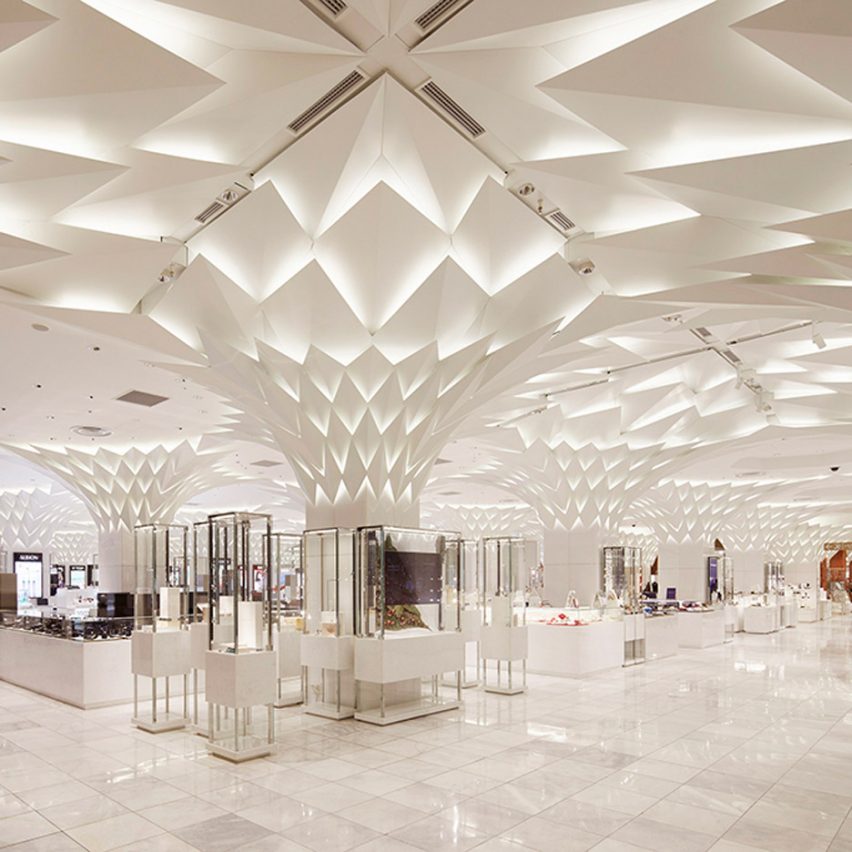
Leaf-shaped aluminium panels cover ceiling of Tokyo department store

November 25, 2020 India Block 0

Japanese studio Lighting Planners Associates lit a white tree-like canopy for the interior refurbishment of the historic Nihombashi Mitsukoshi Main Store in Tokyo. The retail brand traces its history back to 1673 and a kimono fabric seller named Echigoya, while the department store was established in 1904. Japanese architect Kengo Kuma was brought on board

The post Leaf-shaped aluminium panels cover ceiling of Tokyo department store appeared first on Dezeen.