No Image

Huellas House / cumuloLimbo studio

July 7, 2020 Andreas Luco 0

In the 1930s, people liked the large heated entrances, where they received noble guests, and the huge bathrooms and halls were conceived as rooms where they could spend most of their time. However, the bedrooms could become tiny, not even having radiators. That is why the famous hand brazier was used, or in its absence, bottles with hot water. The layout of apartment #JJ74 reflected this past way of life, whose architecture of long corridors and high ceilings is still present in many homes in neighborhoods like Salamanca in Madrid.

No Image

School in A Veigadaña / Prieto + Patiño + Encaixe Arquitectura

July 7, 2020 Andreas Luco 0

In a complex and irregular plot a circle imposes its pure geometry. The nursery school is placed inside the circle, while two parallelepipeds determine the entrances. This recognizable geometry tries to dialogue with an environment full of contrasts: industrial estate, rural constructions, crops and pilgrims walking through the Camino de Santiago. The school faces south in a sequence of large windows and skylights protected from direct radiation in the summer by wide cantilevers and, simultaneously, allowing it in the colder months.

No Image

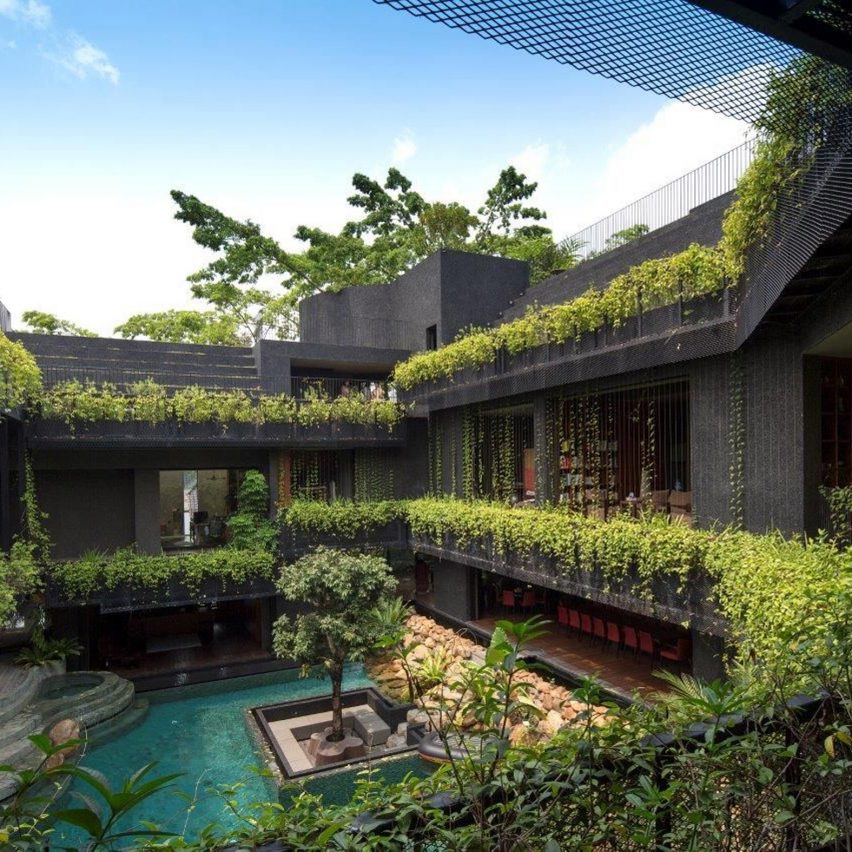
Five houses where the courtyard is the heart of the home

July 7, 2020 Tom Ravenscroft 0
Courtyard living: Contemporary houses of the Asia-Pacific by Charmaine Chan

Charmaine Chan has highlighted 25 recently completed courtyard houses for her book Courtyard living: Contemporary houses of the Asia-Pacific. Here she picks five of the most interesting. As the book’s title suggests, Courtyard living: Contemporary houses of the Asia-Pacific is a compilation of houses completed in the past 10 years across Asia and Oceania that are focused

The post Five houses where the courtyard is the heart of the home appeared first on Dezeen.

No Image

Reused and Recycled Materials in 10 Interior Design Projects

July 7, 2020 Julia Daudén 0

Recycling and reusing in civil engineering is extremely important, especially when considering the amounts of waste production and energy consumption involved in the processes related to the construction site. Creating construction elements by re-designing the role of old objects or materials represents an objective approach to upcycling, as a path towards a more sustainable and responsible future.