No Image

Clementina Cowork / Izaskun Chinchilla Architects

May 9, 2019 Daniel Tapia 0

Coworking space with a secret garden paying homage to Gràcia’s modernism
Until the 18th century, Gracia neighborhood was a rural town articulated by “masías” (typical Catalonian rural housing), religious convents, and high-society manor houses. From the 19th century, with the second industrial revolution and the destruction of Barcelona’s medieval walls, the neighborhood became key to the urbanistic expansion of the city. All ancient cultivation fields became terrain to construct and install new industries. Paseo de Gracia, being the bourgeoisie’s favorite Sunday walk path, soon propelled Vila de Gràcia to be permanently annexed to Barcelona in the year 1897.

No Image

Perkins + Will Design the World’s Tallest Wooden Skyscraper for Vancouver

May 9, 2019 Eric Baldwin 0

Perkins + Will have revealed a new design for the world’s tallest wooden skyscraper in Vancouver. Called Canada Earth Tower, the mass timber project is designed along the city’s Central Broadway corridor. Bruce Langereis, president of Delta Land Development, unveiled the company’s proposal to transform a 1.3-acre lot at 1745 West 8th Avenue with a project that could rise up to 40 floors. Canada Earth Tower aims to become a new precedent and benchmark for green building construction.

KUP architekten revitalizes traditional tyrolean farmhouse in southern italy

May 9, 2019 macnadusa 0

situated in italy’s south tyrolean village of tunes, KUP architekten renovates the saxerhof farmhouse. the heritage building is a characteristic ‘einhof’ whose programs — both residential and agricultural — are organized together under a single roof. while one half is designated for living spaces, the other houses a stable and barn. the project’s rich exterior […]

The post KUP architekten revitalizes traditional tyrolean farmhouse in southern italy appeared first on Architecture Admirers.

Cadaval & Solà-Morales converts 19th-century theatre into spacious Barcelona home

May 9, 2019 Natasha Levy 0
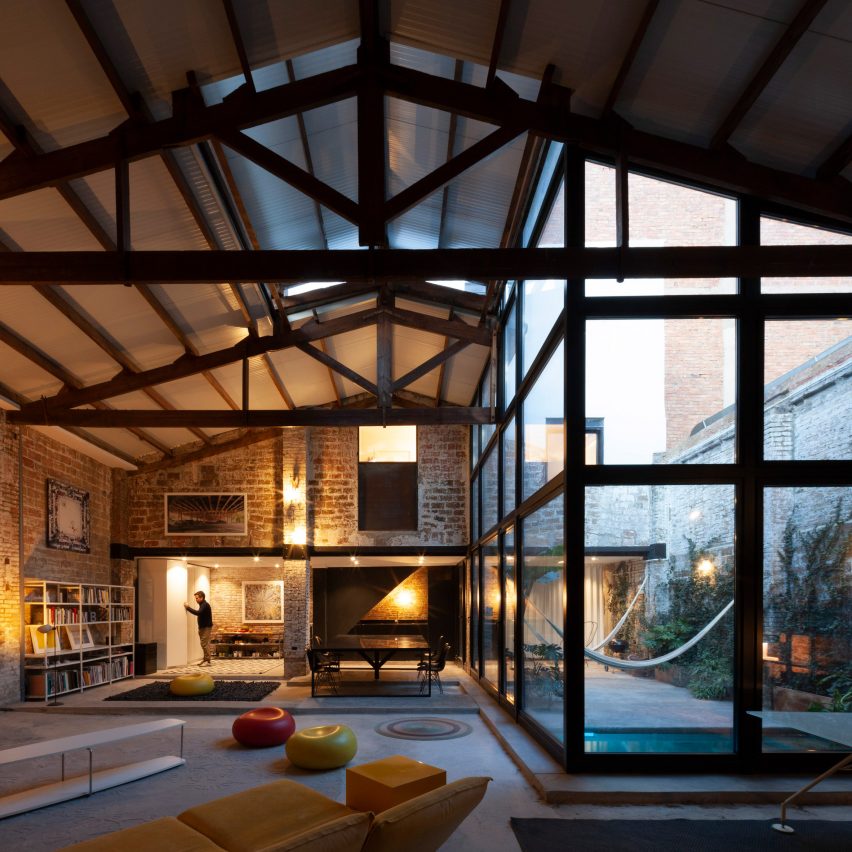
Cadaval & Solà-Morales The Theatre Barcelona

Aged brick walls and ceiling beams hint at the past lives of this building in Barcelona, which Cadaval & Solà-Morales has turned into a contemporary home. Named after its former life as a drama venue, The Theatre house has been overhauled by local studio Cadaval & Solà-Morales to feature lofty living and work spaces. The house

The post Cadaval & Solà-Morales converts 19th-century theatre into spacious Barcelona home appeared first on Dezeen.

No Image

BD House / Vilalta Architects

May 9, 2019 Pilar Caballero 0

The project is located on a semi-pedestrian street where new buildings coexist along with townhouses. The site is defined by a long facade of 11 meters and a courtyard in the back.

No Image

Accordion Doors And Windows: Opening Façades To The Outside

May 9, 2019 Eduardo Souza 0

As ingenious solutions for environments that require additional space and ventilation, articulated or accordion doors and windows operate by folding their leafs one over the other and onto the sides of the opening. They moving via upper and lower rails which can be embedded into masonry and allow separation and integration rooms while adding aesthetic value to the project.

This system generates a similar effect to that of a sliding door or window, but it differs in that all its leafs remain in the same plane when they are closed, giving a clean appearance to the façade.

No Image

We’re Looking for ArchDaily Global’s Next Content Editor!

May 9, 2019 AD Editorial Team 0

We are hiring! Our Content Team is constantly working for our readers from all over the world in a platform that operates in four languages – Spanish, English, Portuguese and Chinese Mandarin. Our main goal is to ensure that all the discussions about architecture and the city reach the maximum possible global audience.

No Image

What to Know Before Tackling a Renovation Project

May 9, 2019 Paula Pintos 0

As technology moves forward, so does architecture and construction. Architects, designers, and planners around the world now have infinite tools and resources to design and build the cities of today and the future.  As promising as this may sound, new construction is also consuming our world’s limited resources faster than we can replenish them.