

Month: August 2017
Kaleidoscope House / Paul Raff Studio
Kaleidoscope House, designed by architect Paul Raff, was built for a family of four located in the Chaplin Estates neighbourhood of central Toronto.
Moon Hoon uses diagonal beams to brace stacked-box house on Jeju island
South Korean architect Moon Hoon has completed a concrete house on the island of Jeju, featuring cantilevered boxes stacked on top of each other and braced by diagonal reinforced-concrete beams. Moon Hoon designed the building for a plot on South Korea’s largest island, which is located to the south of the Korean peninsula and is
The post Moon Hoon uses diagonal beams to brace stacked-box house on Jeju island appeared first on Dezeen.
Carbuncle Cup shortlists six contenders for worst building of 2017
Six buildings have been shortlisted for architecture’s least illustrious prize – the Carbuncle Cup for the UK’s worst new building from the last year. The projects nominated range from a new entrance to a rail station in Peston, Lancashire, to a student halls of residence in Portsmouth, Hampshire, and the redevelopment of Battersea Power Station in London. The annual
The post Carbuncle Cup shortlists six contenders for worst building of 2017 appeared first on Dezeen.
Nano House / Punto Arquitectónico + ARCICONSTRU
Casa Nano, is conceived as a place of refuge and shelter for a family of four. The project is divided into two stages, corresponding to the purchase of the two lots in which it is located. The volume of the house evolves according to the orientation of each space, favoring the capture of ventilation and natural lighting.
Simple House / Moon Hoon
The weather is strong, it dominates jeju life, it is very windy quite often, and weather changes instantaneously. The basalt rocks are everywhere, demarcating fields, and individual houses. The orum, which is like a little hill, is everywhere, more than 350 of them in jeju island. It creates a scene. The island is sort of an exotica among Koreans, weather and vegetation reminds them of tropics. In the past, it was home for many exiles from the mainland. Time flows rather differently here. Weather is the ruler.
This Pavillion Lives and Dies Through Its Sustainable Agenda
Are the concrete buildings we build actually a sign of architectural progress? Defunct housing projects abandoned shopping malls, and short-sighted urban projects are more often than not doomed to a lifetime of emptiness after they have served their purpose. Their concrete remains and transforms into a lingering reminder of what was once a symbol of modern ambition. Stadiums and their legacies, in particular, come under high scrutiny of how their giant structures get used after the games are over, with few Olympic stadiums making successful transitions into everyday life. With a new approach to sustainability, the Shell Mycelium pavilion is part of a manifesto towards a more critical take on building. Say the designers on their position: “We criticize these unconscious political choices, with living buildings, that arise from nature and return to nature, as though they never existed.”
What’s Stopping Urban Designers From Creating Walkable Neighborhoods From Scratch?
This article was originally published by Common Edge as “Why Can’t We Create Brand New Walkable Communities?“
lai cheong brown’s prefabricated farmhouse travels to french island in victoria, australia
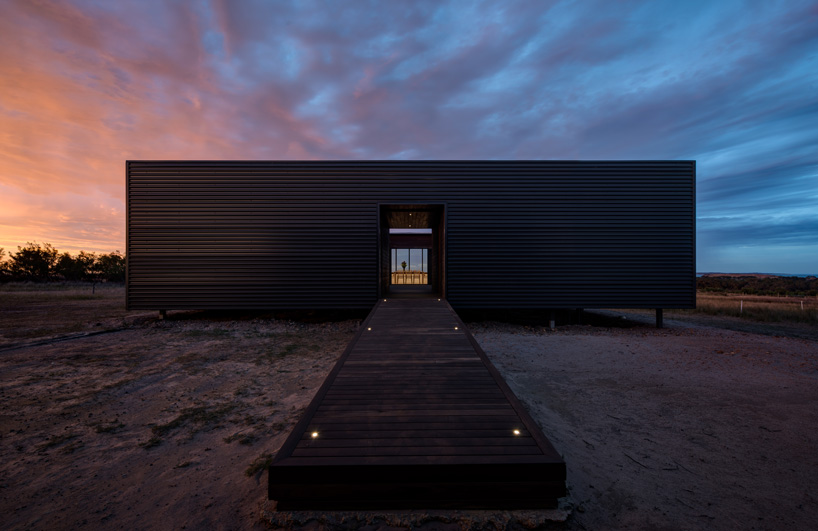
the design of this isolated dwelling incorporates the concept of a caravanserai – a safe haven.
The post lai cheong brown’s prefabricated farmhouse travels to french island in victoria, australia appeared first on designboom | architecture & design magazine.
10 Even More Beautiful Staircases – Part III
The stair is one of the most fundamental elements of architecture. Whether thin and delicate or bold and colored, in some projects a staircase becomes the buildings’ main protagonist and serves as a focal point for the entire project. It is through staircases that architects create spatial forms and visuals that reveal new ways to perceive a constructed space. For this reason, we’ve searched our archives (again!) in search of some more inspiring stairs.